Searching the Middle2026
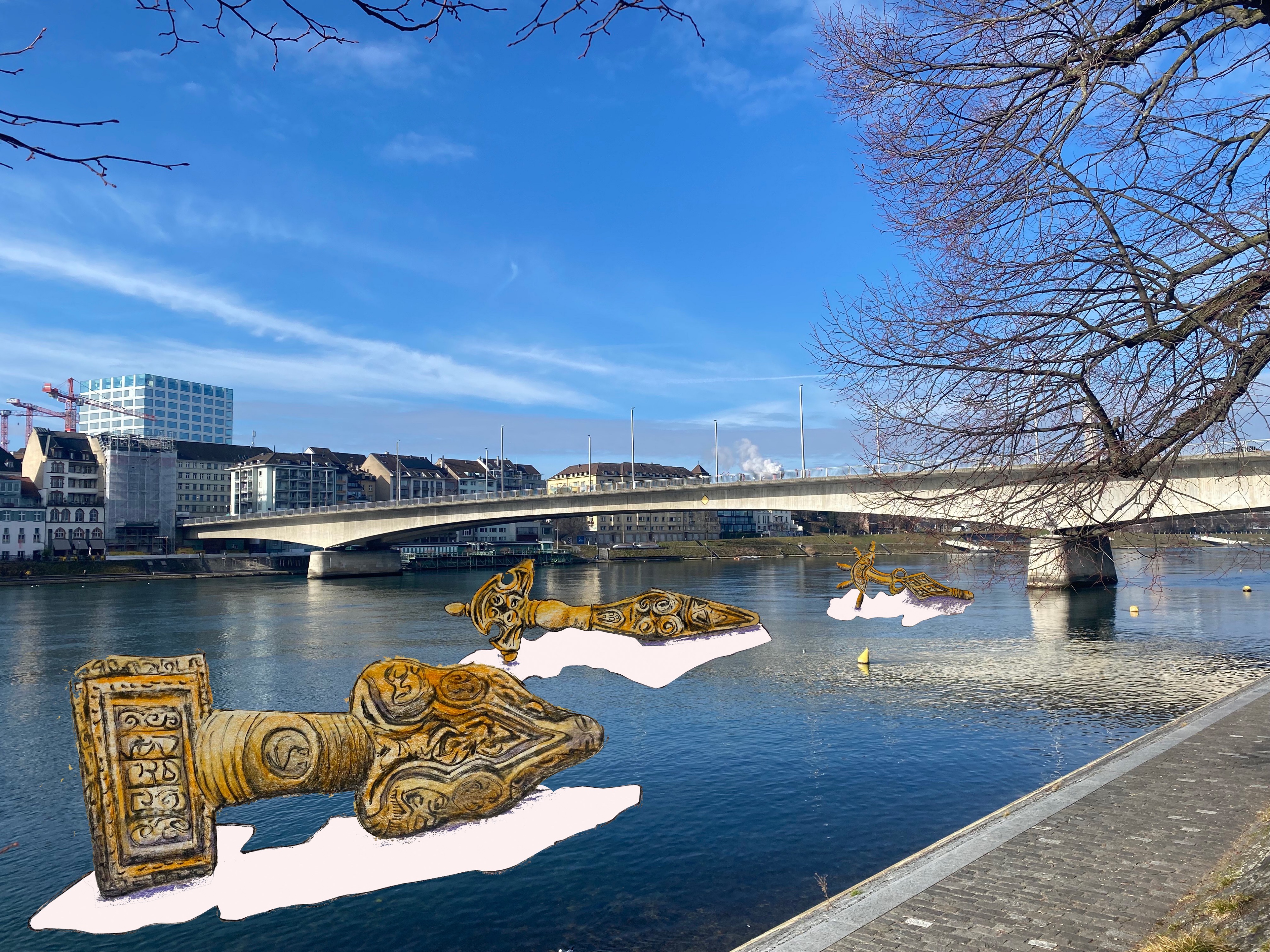
Searching the Middle is a short film and installation exploring Basel’s Mittlere Brücke as a liminal space of history, identity, and control. Golden brooch replicas, historically linked to exclusion, would be set afloat in the Rhine, reactivating their social and magical functions. The project remains unrealized, suspended at the intersection of regulation, ethics, and collective memory.
Art is an in-between place where anything can happen; I have always thought so. What I did not necessarily think before, though, is that this place is for art what it is for magic, and both (perhaps the same thing said in different ways) are spaces of transition.
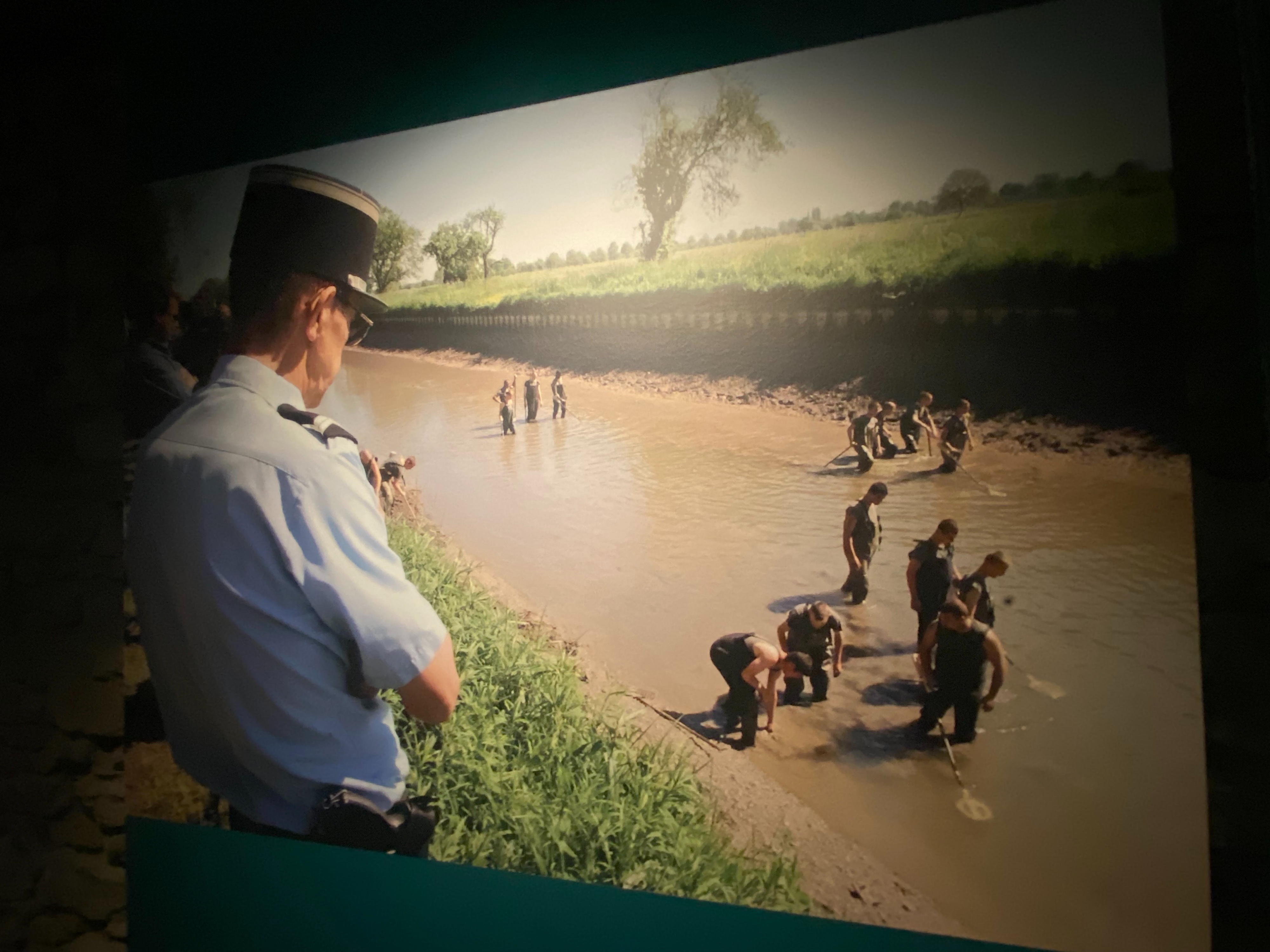
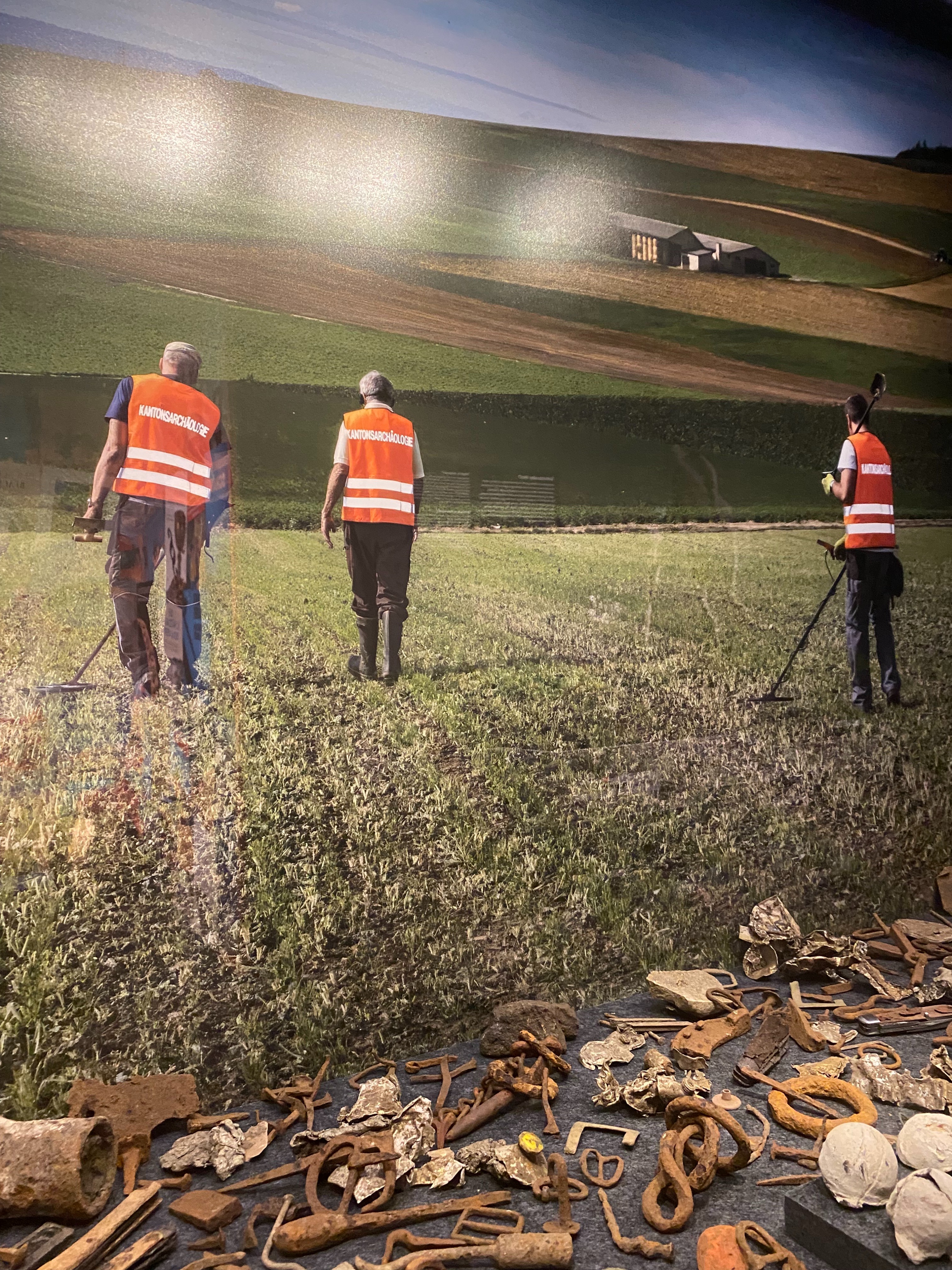
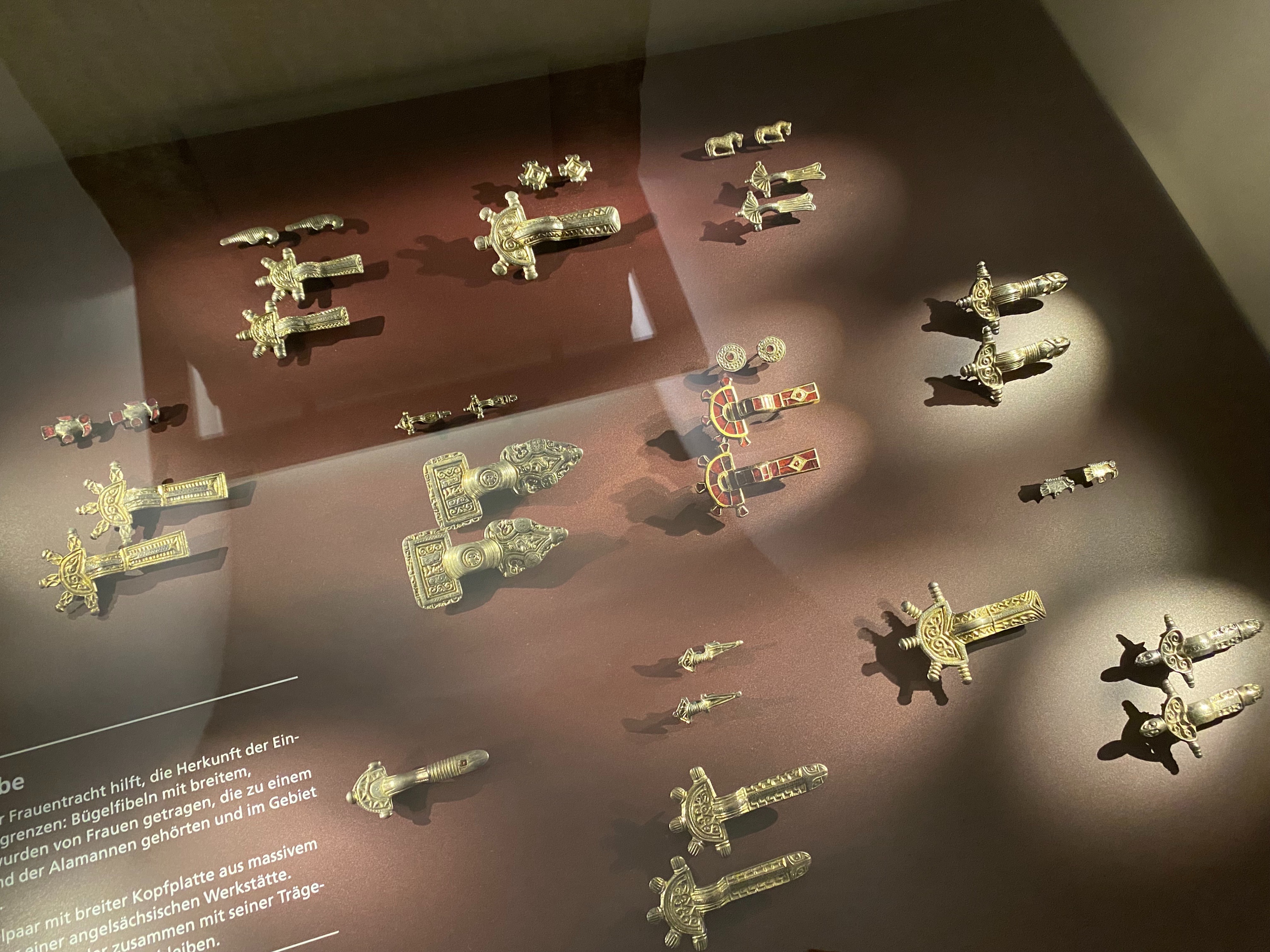
While living in Basel, I became interested in two seemingly unrelated narratives: the historical punishment of alleged witches at the Mittlere Brücke, and contemporary groups searching the Rhine’s banks for archaeological remains under official supervision. In the Basel Historical Museum, I encountered photographs of these searches: individuals with metal detectors, monitored by guards to ensure that nothing is privately appropriated. The images were striking — controlled excavation, regulated discovery, authorized memory.
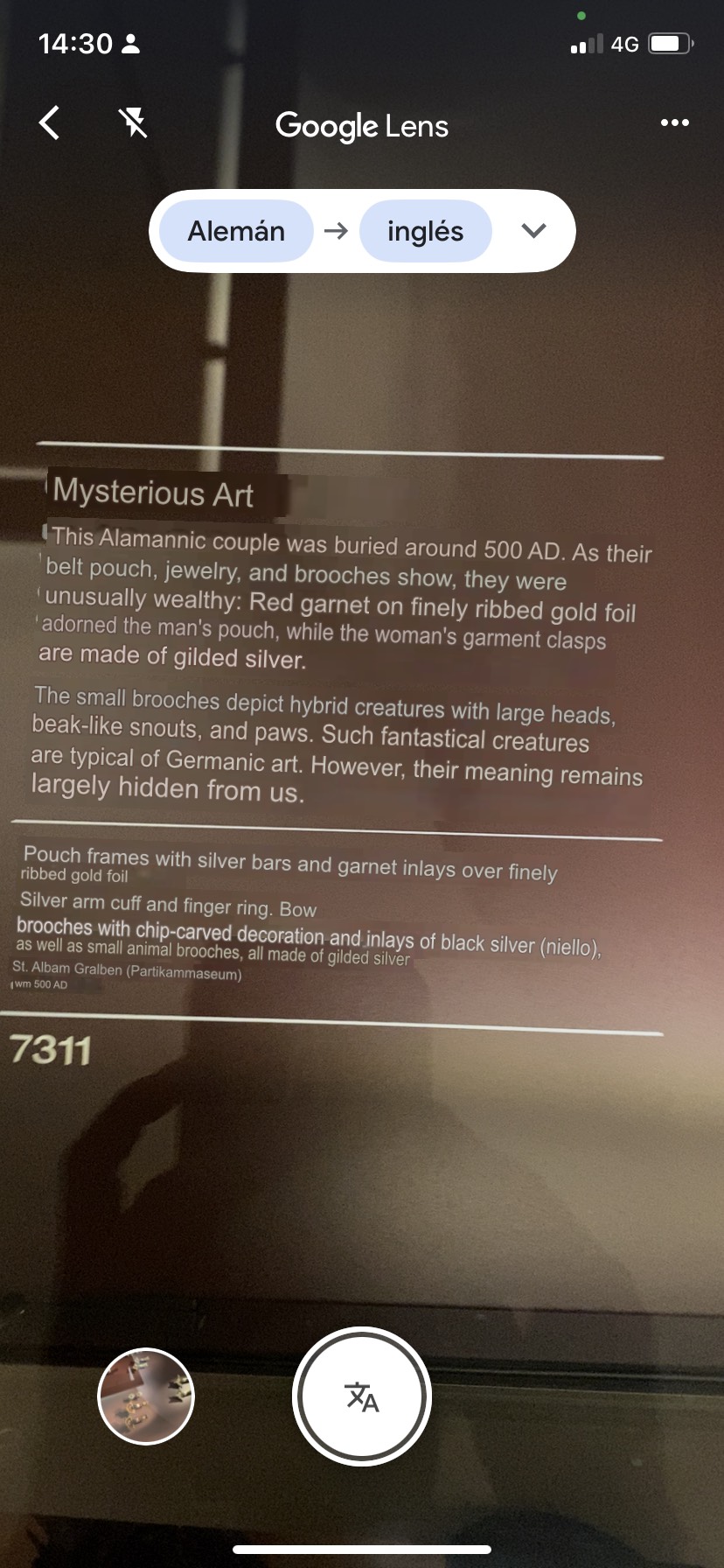
From this convergence emerges Searching the Middle, a short film and large-scale installation that blurs the boundaries between documented history and speculative reconstruction. In the film, during an official search beneath the Mittlere Brücke, a participant discovers an ancient brooch. Historically associated with people from the Elbe region during the Middle Ages, such brooches reportedly functioned as markers through which Basel’s inhabitants could identify certain foreigners — an object of recognition, and therefore of classification and potential exclusion. Why are these brooches found beneath the “Middle Bridge”? What forms of passage, control, or violence took place there? What does it mean that objects tied to identity and otherness surface precisely in this in-between space?
At the end of the film, three monumental replicas of the brooch — approximately four meters high, rendered in gold — are released into the Rhine to drift downstream. A voice-over reflects on their origins, their users, and their presence in that specific section of the river, intertwining archival research with conjecture. By setting these three golden structures afloat, the project proposes a debate around museum conservation systems that suspend objects from use in order to stabilise them as historical evidence. What is lost when magical, social, or discriminatory functions are neutralized in favor of impersonal preservation? By returning the brooches to the river — to movement, risk, and transformation — the work symbolically reactivates them.
Although the research, conceptual framework, and visual development of Searching the Middle are well advanced, the project remains unrealized because its central gesture — releasing three monumental sculptural forms into the Rhine — requires institutional support, logistical coordination, and public authorization. The work deliberately operates at the threshold of public space regulation, preservation ethics, and collective memory; without the appropriate structural framework, it cannot responsibly take form. Its unrealized state is therefore not a lack of completion, but a structural condition of the project itself: it exists in suspension, much like the objects it imagines — waiting for the precise alignment of context, risk, and collective trust to become real.
Searching the Middle inhabits the unstable zone between fact and fiction, archaeology and myth, documentation and speculation. It proposes that suspicion can be a methodology, and that the “middle” — the threshold — is a site where hidden histories resurface.