Untitled2026
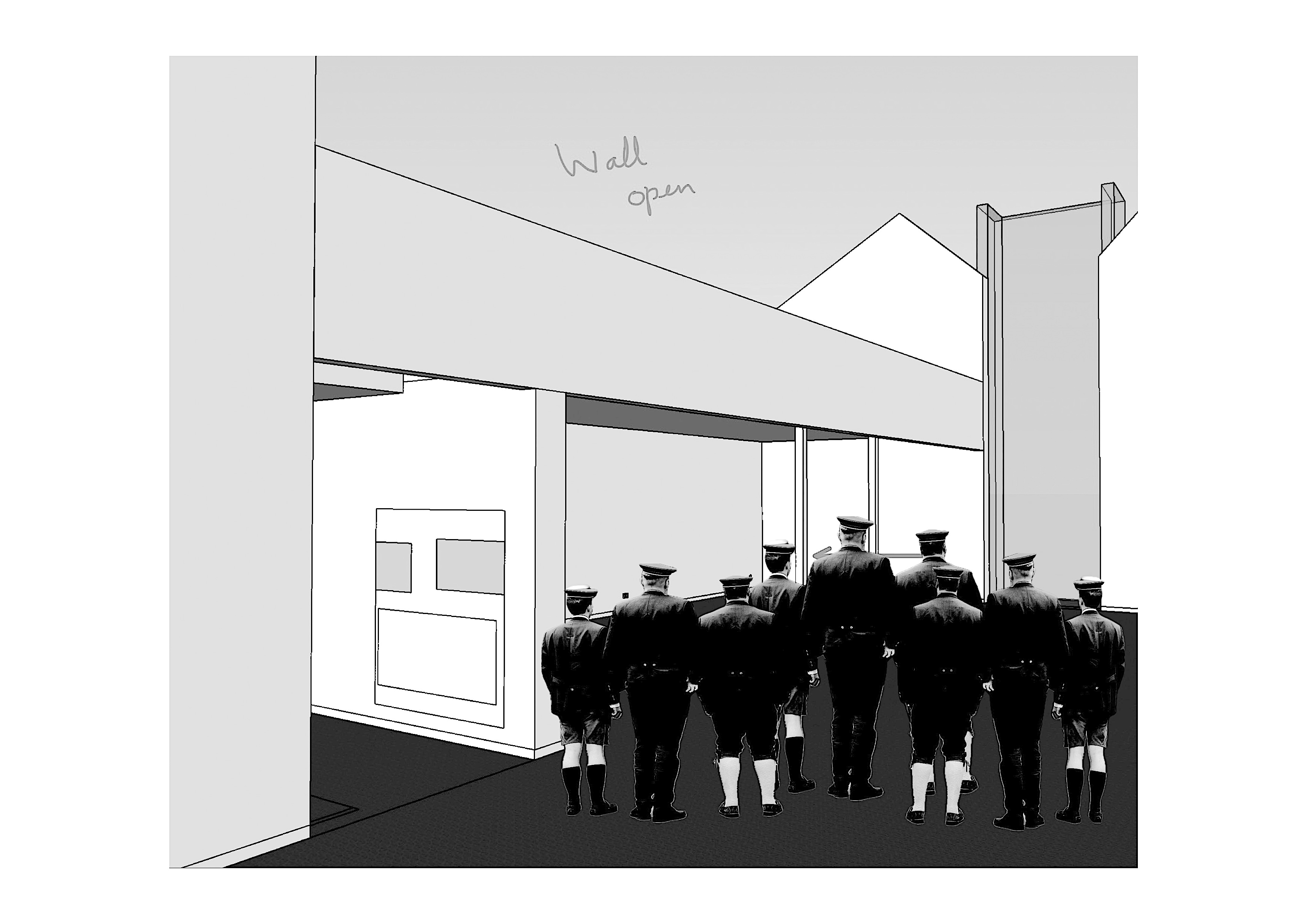
Invited by a Kunstverein, the project staged local Vereine rituals to explore power, masculinities, and control. Amid internal institutional conflicts and Germany’s stance on Israel’s war in Palestine, the artist withdrew in solidarity with striking cultural workers, leaving the project unrealised.
A while ago, I was invited to present a solo exhibition at the Kunstverein of a medium-sized German city — my first institutional exhibition abroad. In recent solo exhibitions in Zurich and Rapperswil-Jona, I had worked site-specifically, taking geographical, historical, architectural and institutional contexts as points of departure to develop exhibitions consisting exclusively of newly produced works. For my Germany debut, I decided to take my cue from the institution of the Kunstverein and, more broadly, from the German format of the Verein — the civic association — which plays a central role in social life and local identity. My plan was to initiate a collaboration between the Kunstverein and a small selection of other Vereine in the city, which, according to various figures, boasts over 1,800 registered associations. I selected three associations that I considered emblematic of the local context and that aligned with my research interests:
The Senioren Convent is a deeply conservative association of Corps fraternities, Burschenschaften. These exclusively male student and alumni associations are characterised by elitist and exclusionary structures; in the university city where I was to exhibit, fraternity culture is arguably more visible than in any other German city. The Burschenschaften regularly make headlines for sexism, antisemitism, racism, and their proximity to the extreme political right.
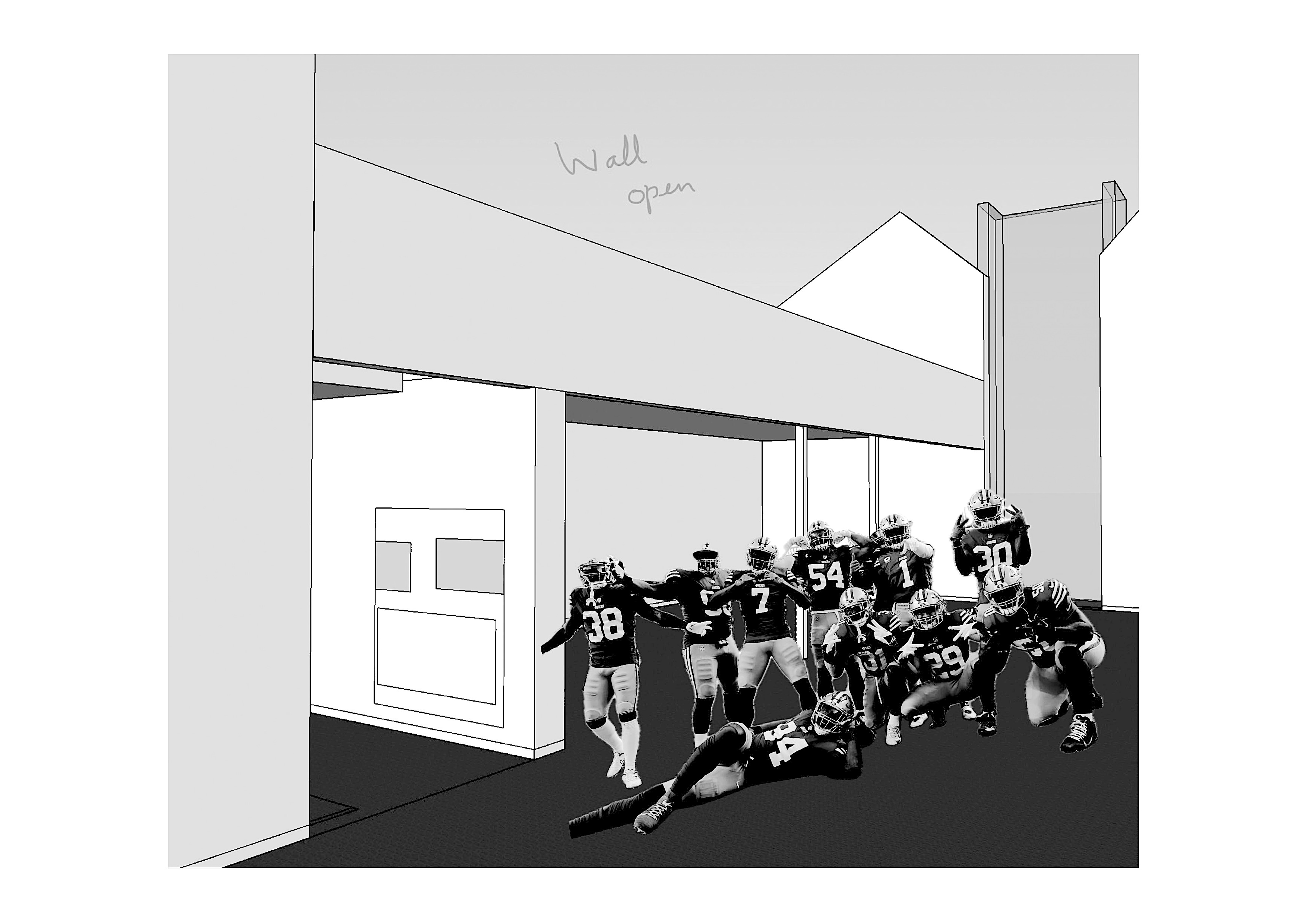
The city’s Turnverein comprises numerous sports divisions, one of the most popular being its American football team — an indication of the history of US military presence in the city, which until recently hosted the largest US army base in Europe as well as residential neighbourhoods reserved for military personnel.
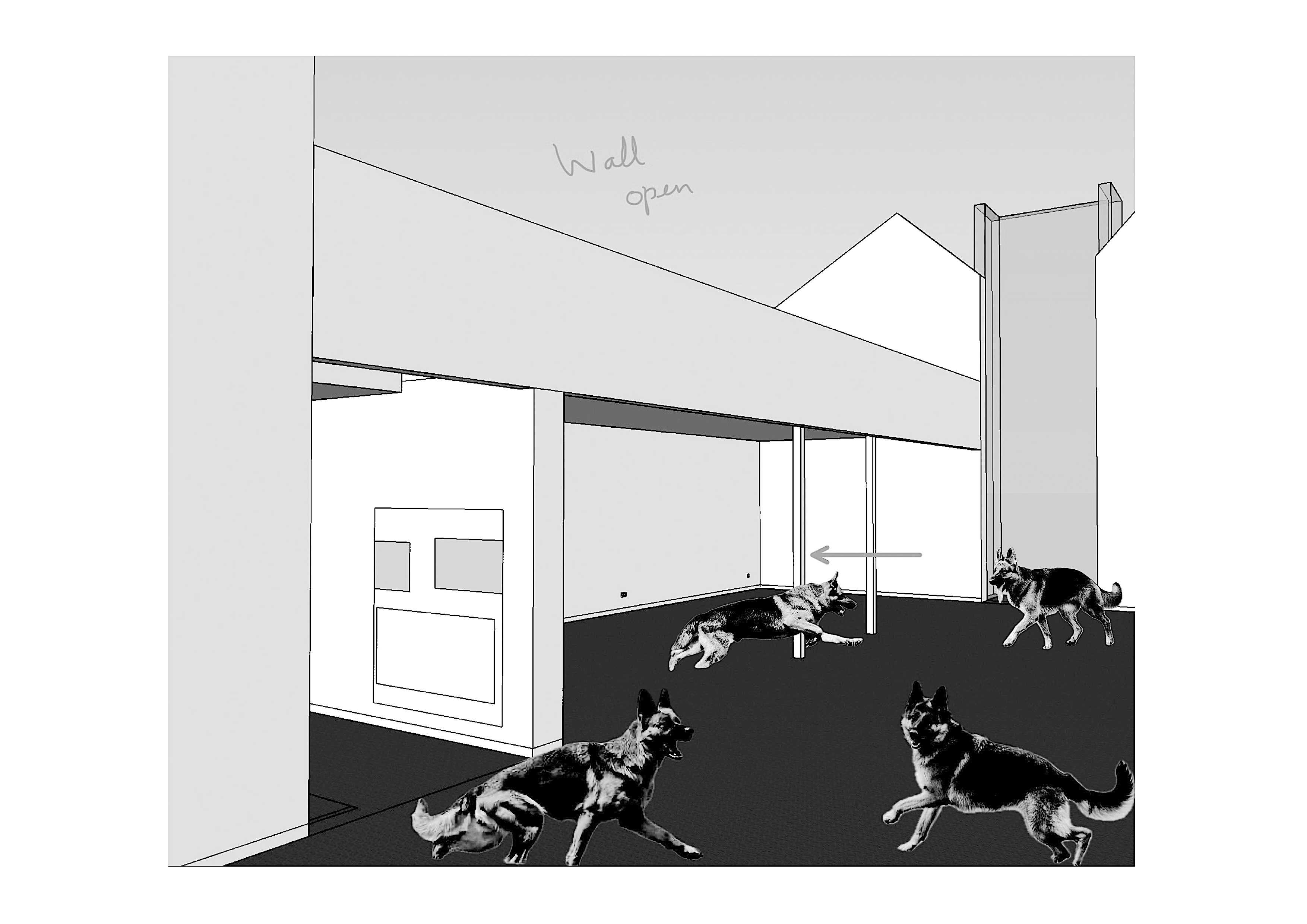
The Verein für Deutsche Schäferhunde (Association for German Shepherd Dogs) is dedicated to propagating the breed standardised at the start of the 20th century by Max von Stephanitz, whose ideals of discipline, utility, and controlled breeding resonate with broader histories of German nationalism.
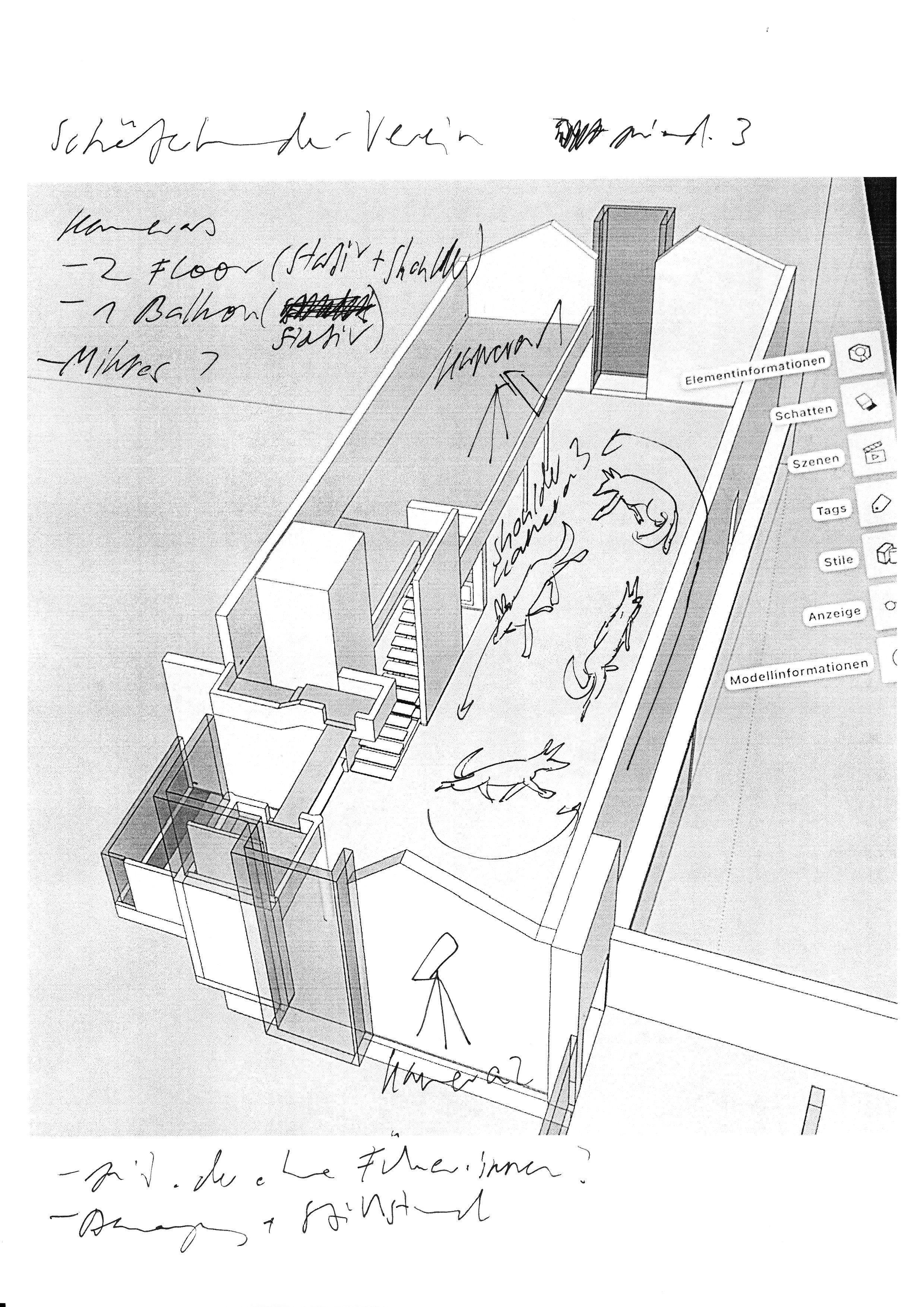
Together with the Kunstverein, I proposed inviting these groups to perform some of their activities and “rituals” within the empty exhibition space instead of their respective clubhouses, football fields or training grounds. Drinking and singing for the Burschen, speed and tackling drills for the Turnverein-footballers, obedience and agility training for the dogs and their Herrchen/Frauchen — these practices would be staged inside the Kunstverein and documented by my film crew. The resulting moving image works would form my exhibition. It would be an exhibition about power and violence, control and discipline, hegemonic ideals of masculinity and mechanisms of exclusion, as well as human—animal relations shaped by training, breeding, and regimes of control. While grounded in a close observation of local specificities, the works would use this setting as an exemplary case to address broader socio-political dynamics and contemporary challenges — from rising authoritarian tendencies to questions of social inequality and cultural hegemony — themes that shape my artistic practice and for which the Kunstverein provided a productive institutional framework. I had never before worked on such a scale or involved such a number of participants. The project relied heavily on the institutional backing of the Kunstverein, whose support would be crucial in persuading the associations to collaborate. The director, curator and board were enthusiastic, and we submitted funding applications in Switzerland and Germany, assembled a production team and initiated conversations with the three Vereine.
However, as internal issues at the Kunstverein and between the institution and fellow invited artists became more pronounced — set against the broader context of ongoing German support for Israel’s genocidal war in Palestine — I decided to cancel my exhibition, leaving an extensively researched, carefully planned, and partially funded project unrealised. In joining the strike movement of international cultural workers withholding labour and presence from German cultural institutions, I hoped that the resulting gap in the programme would compel the institution to confront its own practices. I disagree with the Kunstverein’s assertion that “a critical show is better than no show at all.” It is not the responsibility of us artists to rehabilitate institutions that have been criticised for silencing dissenting voices. The time invested in research, applications, planning, and travel was considerable. More importantly, I do not know if or when I will receive another invitation from an international art institution — a risk I was fully aware of when withdrawing. Yet I do not regret my decision in the slightest and have not accepted any invitations to exhibit in Germany since.